
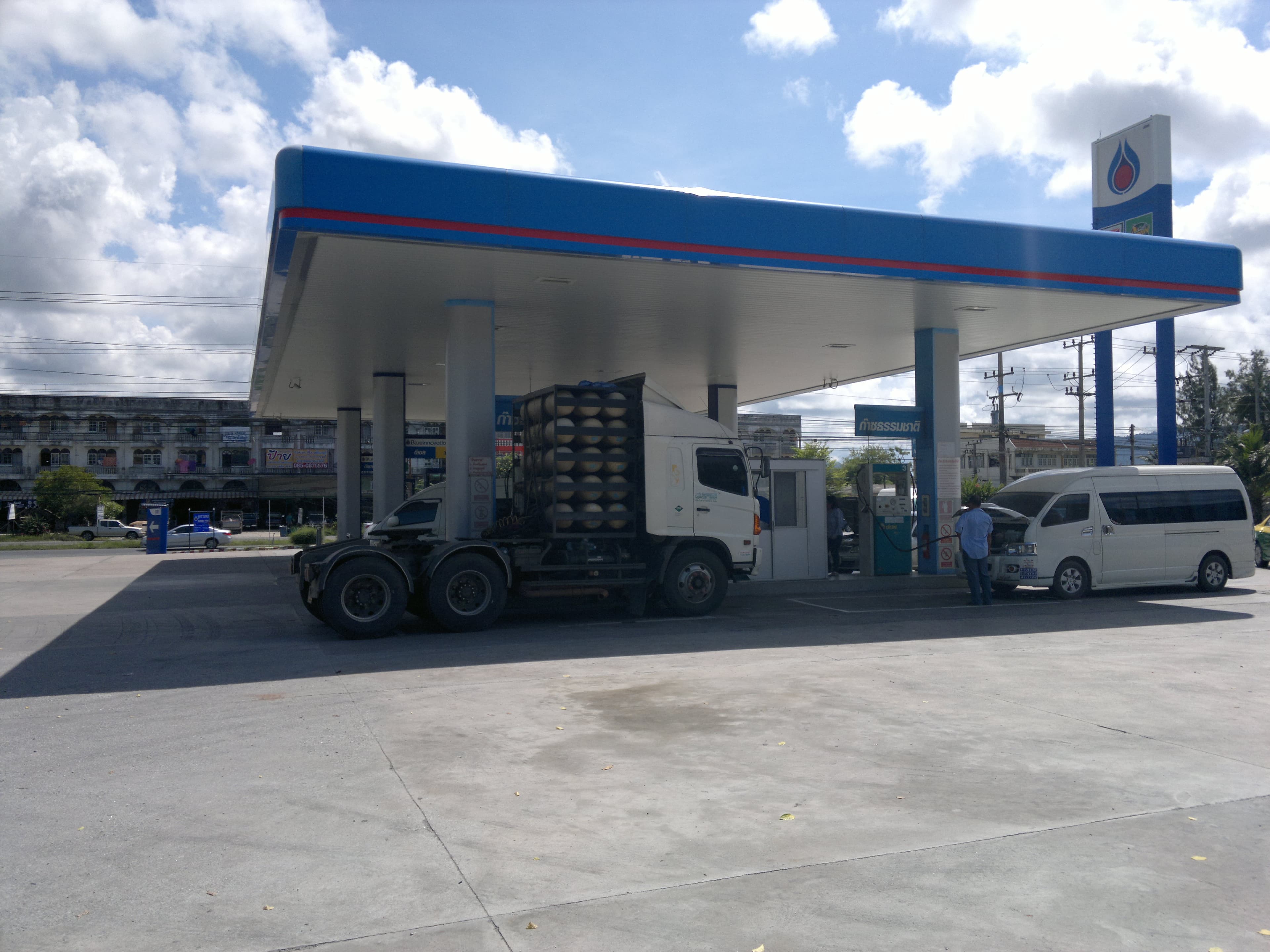
CNG
CNG for commercial mobility
Compressed natural gas can be relevant for trucks, buses and other vehicles that work hard. Daxon helps you understand the requirement and explore whether CNG is appropriate for the fleet.
Who it is for
In Nigeria, CNG conversations usually start with operators whose vehicles work every day and consume meaningful volumes of fuel — logistics fleets, trucking companies, bus operators and other commercial vehicles. Suitability depends on your fleet, not a generic industry claim.
How businesses evaluate CNG
Fuel is a serious operating cost for Nigerian fleets. Whether CNG makes commercial sense depends on your vehicle profile, fuel consumption, route patterns, gas pricing, access to supply and operating conditions. It is not automatically cheaper than diesel.
Vehicle profile
Fleet size, vehicle types and how hard those vehicles work all affect whether CNG is worth evaluating.
Operating pattern
Route patterns, duty cycle and whether vehicles return to a known base shape the practicality of a CNG conversation.
Current energy use
Existing fuel type and approximate monthly spend give a commercial starting point. Exact figures are not required.
Supply context
Location, access to supply and vehicle readiness are reviewed before any arrangement is discussed. Availability is not assumed.
What information Daxon needs
A short assessment is enough to start a commercial review. Tell us about the fleet you actually run in Nigeria. Technical confirmation and supply availability come later.
- Business type and operating location
- Current energy source
- How energy is used — vehicles or other applications
- Fleet size and vehicle types, where relevant
- Approximate monthly energy spend
- Whether the interest is CNG, LNG, both, or still open
Is CNG relevant for your fleet?
Tell us about the fleet — where it operates, what it runs on today, and how hard the vehicles work. Daxon will review the information and follow up with an appropriate commercial next step.
Assess My FleetIs CNG the same as LNG?+
No. CNG is compressed natural gas, typically discussed for vehicles. LNG is liquefied natural gas and is more often considered for larger or specialised energy requirements.
Is CNG automatically cheaper than diesel?+
No. Potential economics depend on vehicle profile, fuel consumption, route patterns, gas pricing, infrastructure and operating conditions. Those factors should be reviewed against your actual fleet.
Will Daxon convert my vehicles immediately?+
An online assessment is a starting point for a commercial conversation, not a conversion booking. Vehicle readiness, supply and commercial terms are reviewed with you afterwards.
Do you operate CNG stations nationwide?+
Where suitable, Daxon works with the customer and relevant commercial supply relationships to explore an appropriate arrangement. Availability is confirmed as part of the review and is not assumed.
CNG resources
Further reading for operators evaluating CNG in Nigeria.
CNG
What is Compressed Natural Gas (CNG)?
A clear explanation of compressed natural gas and how Nigerian fleets, factories and commercial businesses typically evaluate it.
8 min
Fleets
CNG for Commercial Fleets
How commercial fleet operators in Nigeria can evaluate compressed natural gas without assuming it is automatically cheaper than diesel.
7 min
Fleets
CNG vs Diesel for Commercial Fleets
How fleet operators can compare CNG and diesel without relying on generic savings claims.
8 min